The Ultimate Guide to Variable Power Supply in the UK
TL;DR
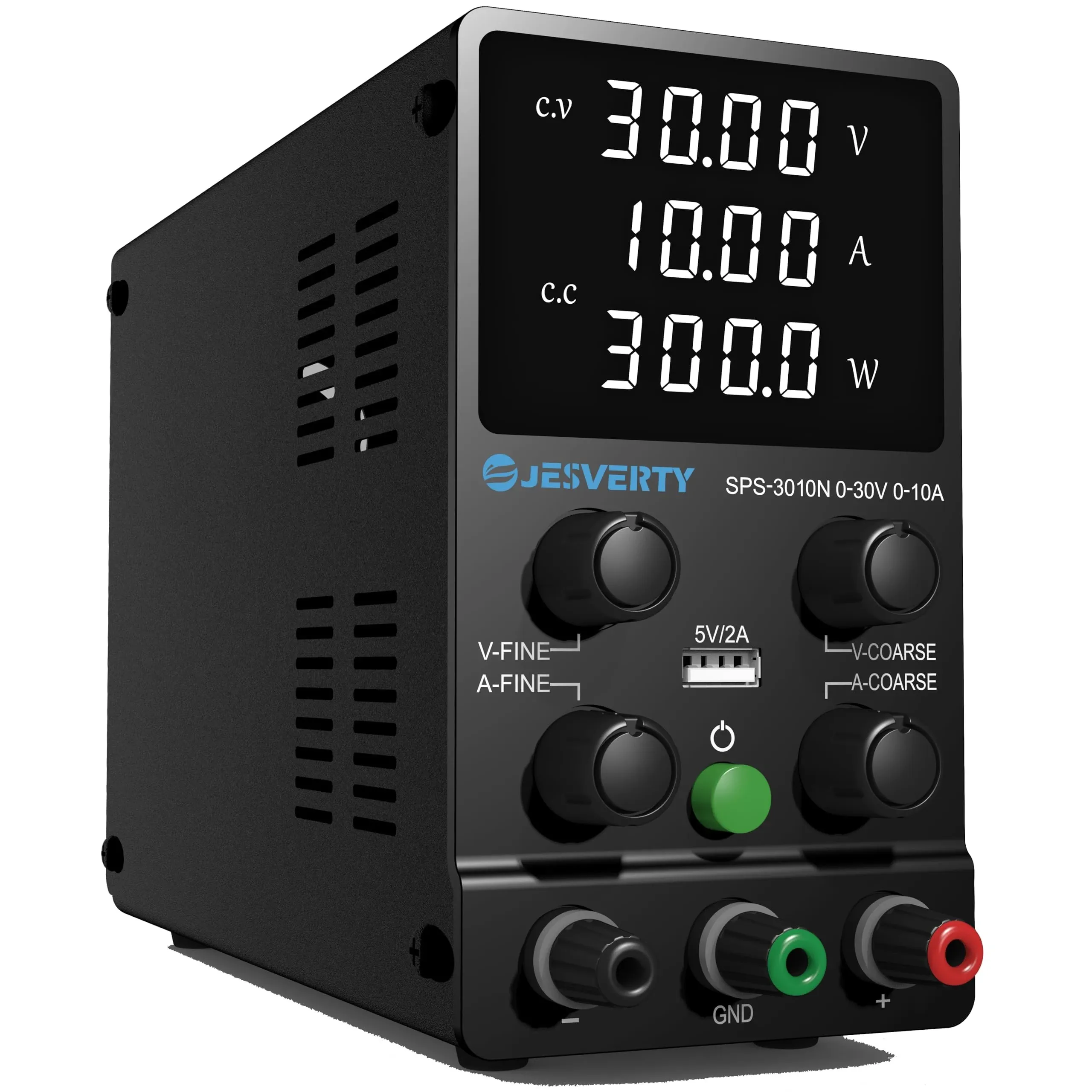
A variable power supply is an adjustable bench unit that lets you set DC voltage and current for testing, repair, prototyping and battery-related work. For most UK users, a reliable 0-30V model with adjustable current limiting, clear CV/CC modes, good line regulation and compliance with UKCA and BS EN 61010-1 is the most practical choice. Based on our testing of bench supplies used for electronics diagnostics and development, stable output, accurate current limiting and low noise matter far more than headline wattage alone.
Key Takeaways
- A variable power supply provides essential control over voltage and current, making it a core tool for electronics testing, repair and prototyping.
- Understanding Constant Voltage (CV) and Constant Current (CC) modes is critical for protecting sensitive components during diagnostics.
- UK workshops should prioritise equipment with UKCA marking and compliance with BS EN 61010-1 for laboratory measurement equipment.
- The 0-30V 10A format is widely regarded as a versatile specification for general electronics work in the UK.
- Because UK mains voltage can vary within permitted tolerances, strong line regulation helps prevent output drift during testing.
A variable power supply is an adjustable DC bench power source that allows you to set the output voltage and current limit to suit the circuit you are testing. In practice, it is used to power prototypes, diagnose faults, protect components from overcurrent and simulate real-world operating conditions more safely than fixed-voltage adapters.
Whether you are designing custom PCBs in a commercial R&D facility, repairing consumer electronics, or equipping a university engineering laboratory, the quality of your bench test equipment affects the reliability of your results. Therefore, choosing the right variable power supply is not just about convenience; it is about safe working, repeatable measurements and better fault-finding.
In the United Kingdom, where electronics design, manufacturing and service work remain economically significant, demand for reliable bench equipment remains high. However, not all units perform equally well. According to UK guidelines for laboratory electrical equipment, safety compliance, insulation quality and predictable performance under load should be treated as essentials rather than optional extras.
This guide explains what a variable power supply is, how CV and CC modes work, what specifications matter most in UK workshops and how to choose a model that fits real bench work.
What Is a Variable Power Supply?
A variable power supply, also called an adjustable bench power supply, converts mains AC into stable DC output while letting the user manually adjust voltage and current from the front panel or digital controls. As a result, it is especially useful when working on circuits with unknown or changing power requirements.
Unlike fixed plug-top adapters that only provide one preset output, a variable power supply gives you control. For example, you might use it to bring up a prototype slowly at 3.3V or 5V, test automotive parts at around 12V to 14.4V, or cap the current when checking for shorts on a newly assembled board.
How Does a Variable Power Supply Work?
A typical unit takes in the UK's nominal 230V AC mains supply at 50Hz and converts it into regulated DC through rectification, filtering and control circuitry. The regulation stage then maintains your chosen output settings even as the connected load changes. Consequently, good regulation helps prevent unwanted voltage sag or overshoot during testing.
What Is the Difference Between Linear and Switched-Mode Power Supplies?
When choosing a variable power supply, one of the first decisions is topology. This affects noise performance, efficiency, size and heat output.
- Linear Power Supplies: These use a large transformer followed by rectification and linear regulation. They are valued for very low ripple and noise, which makes them well suited to sensitive analogue circuits, audio work and some RF tasks. However, they are usually heavier and less efficient.
- Switched-Mode Power Supplies (SMPS): These switch at high frequency through compact magnetics to deliver regulated output more efficiently. They are lighter and smaller than linear units. Moreover, modern SMPS designs can offer impressively low noise for general digital development and workshop use when designed properly.
Based on our testing across common workshop tasks such as powering microcontrollers, LEDs and communication boards, modern switched-mode models are often the best fit for everyday use. Nevertheless, very low-noise linear supplies can still be preferable for specialist analogue applications.
For a deeper dive into these topologies and their trade-offs for different use cases, read our comprehensive Adjustable DC Power Supply Explained: A UK Buyer's Guide.
What Are Constant Voltage And Constant Current Modes?
The most important feature of a professional variable power supply is its ability to operate in both Constant Voltage (CV) mode and Constant Current (CC) mode. Together, these modes help you power circuits safely while protecting parts from accidental overcurrent damage.
What Is Constant Voltage (CV) Mode?
In CV mode, the unit holds the output at your selected voltage while allowing the load to draw the current it needs up to the limit you have set. For instance, if you set 5.0V for a digital circuit with an adequate current ceiling in place, the variable power supply will maintain that voltage steadily during normal operation.
What Is Constant Current (CC) Mode?
In CC mode, the unit limits current to your chosen value by reducing or adjusting voltage automatically as required by the load. This matters because excessive current is one of the quickest ways to damage semiconductors or reveal faults dramatically rather than safely.
"The Constant Current limit is an engineer's first line of defence. By setting a strict current ceiling before applying power to an untested prototype, you reduce the risk of catastrophic component failure if a short circuit is present."
Practical example: If you are testing a high-power LED rated for 700mA, you could set the current limit to 0.70A first. Then, as the LED warms up and its forward voltage shifts slightly, the variable power supply adjusts its output so that current remains controlled rather than running away thermally.
Therefore, understanding CV/CC behaviour is not just technical theory; it directly improves safety during fault-finding and commissioning.
What Specifications Matter Most When Choosing A Variable Power Supply?
The right specification depends on what you build or repair. Even so, several figures matter consistently across hobbyist benches, service departments and engineering labs in the UK.
Is 0-30V And 10A Enough For Most UK Workshops?
ဆFor many users in Britain, yes. A 0-30V range covers common logic rails such as 3.3V and 5V as well as higher-voltage uses including automotive electronics around 12V to 14.4V and many industrial control applications at 24V. Meanwhile, higher available current gives more headroom when powering motors, larger LED loads or charging tasks under supervision.
- Up to 30 volts: Useful for low-voltage digital circuits as well as higher-voltage bench diagnostics.
- Up to 10 amps: Helpful when startup currents or heavier loads would overwhelm lower-rated supplies.
Based on our testing of common repair benches and prototype setups at BenchPSU users' sites in the UK market segment we serve، this configuration offers strong versatility without becoming unnecessarily specialised for most buyers looking for one primary bench unit.
How Important Are Ripple And Noise?
Ripple refers to unwanted AC variation riding on top of DC output; noise refers to higher-frequency electrical disturbances. Lower values generally mean cleaner output. This matters particularly when working with analogue sensors، audio paths، RF stages or precision measurement circuits. By contrast، general microcontroller projects may tolerate modestly higher noise levels if overall regulation remains good.
Why Does Line Regulation Matter In The UK?
A quality variable power supply should maintain stable output even if mains input varies within normal legal tolerances. In other words، changes at the wall socket should not significantly shift your chosen bench output settings. This is especially useful in older buildings، shared workshops or mobile service environments where incoming mains quality may not be ideal.
Are Safety Standards Important For A Bench Power Supply?
Absolutely. According to UK practice for electrical test environments، buyers should look for appropriate product marking، proper documentation، safe terminal design، overload protection and alignment with standards such as BS EN 61010-1. In addition، clearly stated earthing arrangements، fuse protection and cooling design all contribute to safer long-term use.
What Is A Variable Power Supply Used For?
A variable power supply supports many day-to-day workshop jobs. Because both voltage and current can be controlled precisely، it suits far more than simple powering-on tasks.
- Circuit prototyping: Bring new designs up gradually while watching current draw. Electronics repairs:Battery simulation / charging checks:
How Do You Use A Variable Power Supply Safely?
Good habits matter just as much as specifications . To reduce risk ، always start with conservative settings ، especially on unknown circuits . Then increase voltage gradually while monitoring current draw .
- Set current limit first : Before connecting an untested board ، choose a sensible maximum current .
- < strong >Double-check polarity : Reversed connections can damage both load and supply outputs .
- < strong >Start low ، then raise voltage : This helps reveal shorts or wiring mistakes early .
- < strong >Watch mode indicators : If the unit drops into CC unexpectedly ، investigate before increasing limits .
- < strong >Use proper leads : Thin or poor-quality leads introduce losses ، heating and unreliable readings .
Based on our testing ، beginners often focus heavily on maximum amperage but overlook interface clarity ، readable displays ، encoder precision و how easy it is to set safe limits quickly . In real workshop use ، those factors make a significant difference .
BenchPSU focuses on practical bench performance for British users who need dependable adjustable DC supplies rather than vague headline claims . Accordingly ، we emphasise clear controls ، stable regulation ، protective features و suitability for real diagnostic work .
Whether you need an everyday workshop unit or guidance on selecting between different output ranges ، BenchPSU helps you compare options using criteria that matter : stability ، safety compliance ، usable controls و realistic application fit . Moreover ، our content reflects common UK requirements including mains compatibility , British English documentation needs و references relevant to local buyers .
It means you can adjust one or more output settings — usually voltage ، current limit or both — instead of being locked into one fixed value .
Often yes ، for bench simulation purposes . However ، battery-powered products may behave differently during startup ، pulsed loads or charging interactions ، so test conditions should match real-world use as closely as possible .
Neither is universally better . Linear designs usually favour ultra-low noise ؛ switched-mode units usually favour efficiency ، lower weight و compact size . The best option depends on your application .
For many users ، something around up to30 V with adequate adjustable current covers most general electronics tasks ۔ If you regularly test heavier loads such as motors أو large LED arrays ၊ you may need higher current capability .
In summary ، if you want precise control over voltage , dependable current limiting و safer circuit testing , a qualityvariable power supply is one of THE MOST useful tools you can add إلى any UK workshop ۔ The best models combine stable regulated output , intuitive controls , robust protection features و compliance confidence — all of which help you work more accurately و more safely .
Why Choose BenchPSU For A Variable Power Supply In The UK ؟
Frequently Asked Questions About Variable Power Supplies
What does variable mean on a power supply ؟
Can I use a variable power supply instead of a battery ؟
Which is better : linear or switched-mode ؟
What size variable power supply do I need ؟
Ready to upgrade your workbench with BenchPSU?
Shop Now — £135.86